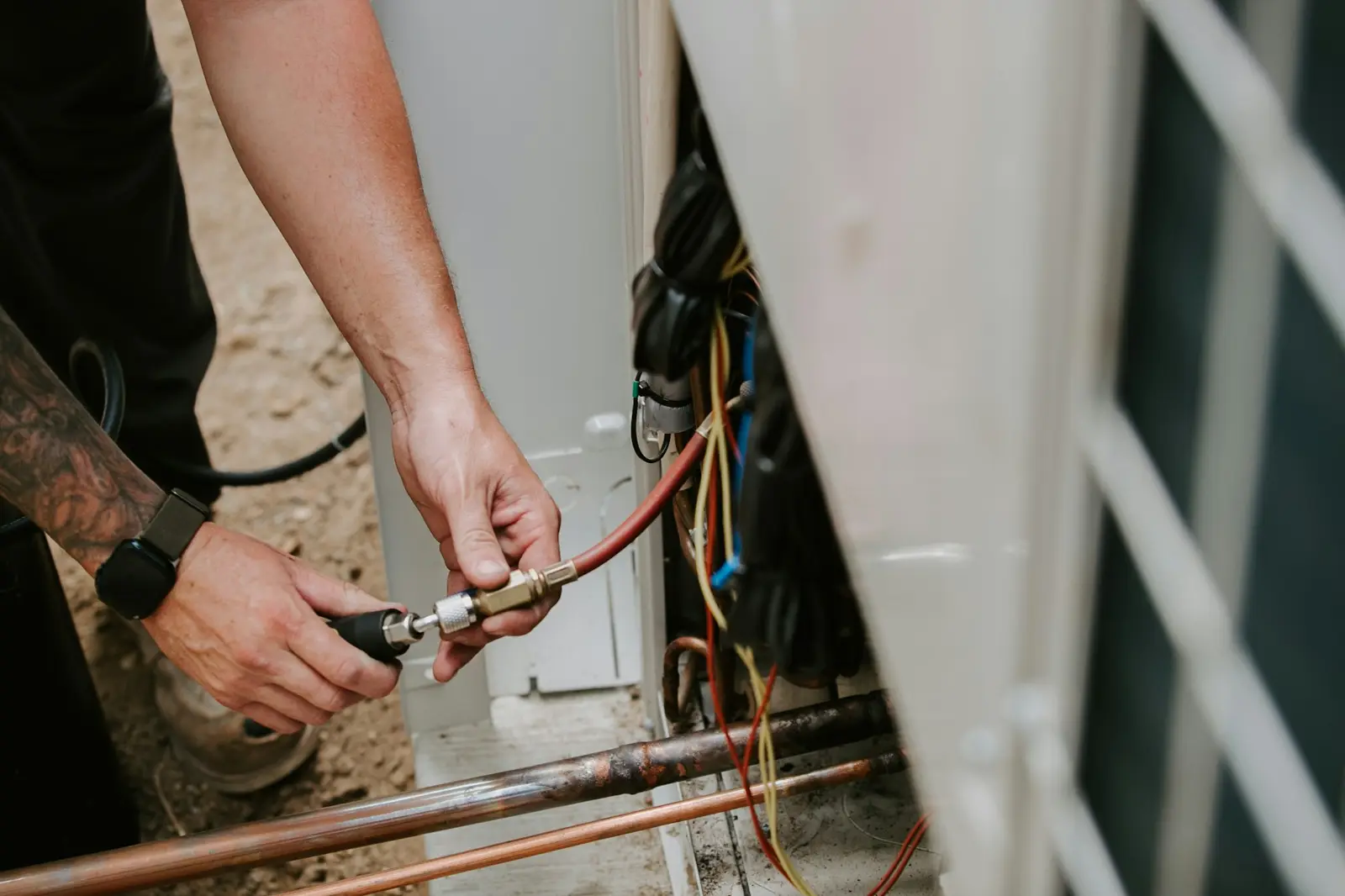

To look after a sump pump, test it by pouring a pail of water into the pit (monthly is ideal, and at least in spring and fall). Make sure the float moves freely, check that the water comes out well away from the house, and replace the backup battery every 3 to 5 years. Do the test before the spring thaw and before a big storm, so you find out about a stuck pump before the basement floods.
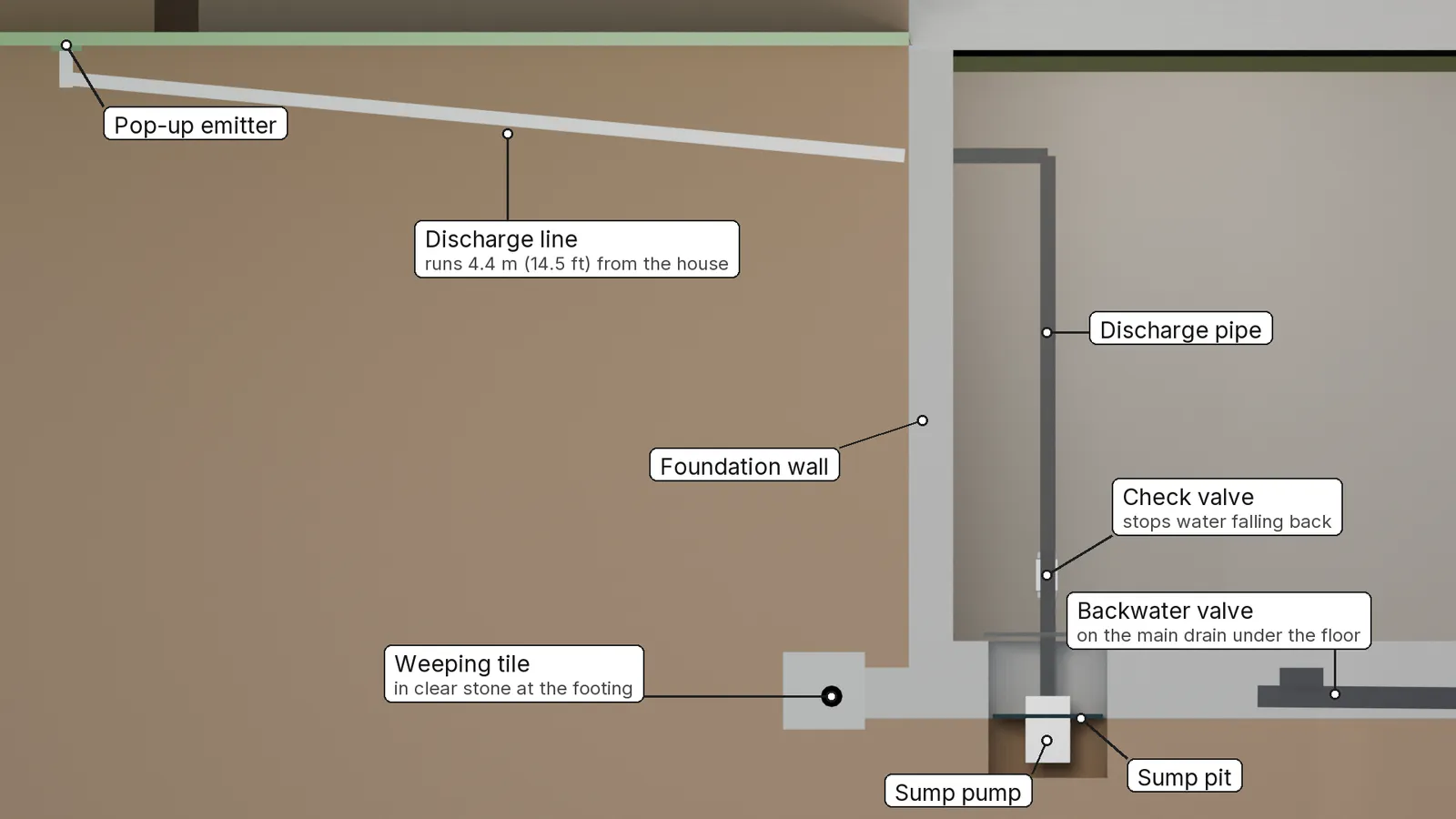
How a sump pump works
Weeping tile around the footing of your house collects groundwater and drains it into a pit in the basement floor. When the water rises, it lifts a float that switches the pump on. The pump pushes the water up a pipe, past a check valve that stops it falling back, and out of the house onto the ground. A backwater valve is a different part: it sits on the main sewer drain and stops sewage backing up into the basement.
What to do, and how often
| Job | How often | Do it yourself? |
|---|---|---|
| Bucket test | Monthly, or at least spring and fall | Yes |
| Clear debris from the pit and float | At each test | Yes, with the pump unplugged |
| Test the battery backup | At each test | Yes |
| Check the outside discharge line | Fall and after big storms | Yes |
| Replace the backup battery | Every 3 to 5 years | Yes, or a plumber |
| Inspection | Yearly, before the spring thaw | No: a plumber, about $168 to $200 |
| Clean the pit and pump | Every 1 to 2 years | A plumber, about $275 to $350 |
iSources: Premier Plumbing and Builders Ontario, 2026.
The bucket test
- Look in the pit. Lift the cover. Unplug the pump before you reach in, and clear out any debris or anything touching the float.
- Plug it back in, then pour a pail of water slowly into the pit until the float rises.
- Watch and listen. The pump should switch on, empty the pit and switch off on its own. It should run smoothly, without grinding or rattling.
- Watch for water coming back. If water flows back into the pit when the pump stops and the pump soon restarts, the check valve may be worn.
- Check outside that the water came out of the discharge line, away from the house.
If the pump doesn't start, call a plumber before the next rain. A stuck float switch is the most common cause.
The battery backup
Basements often flood during storms because that's when the power goes out. A battery backup is a second pump that runs when the main pump loses power or can't keep up. To test it, unplug the main pump and do the bucket test again: the backup should take over. Replace its battery every 3 to 5 years, or sooner if it stops holding a charge or its alarm warns of a weak battery.
iSource: Premier Plumbing, 2026.
Where the water must go
Water from a sump pump goes outside, onto the ground, and away from the house. It must not go into a floor drain, a laundry tub or the sanitary sewer: when many homes do that in one storm, the city sewer backs up into everyone's basements. The discharge line should end 10 to 20 feet from the foundation, so the water doesn't soak back in.
In an Ontario winter, the outside part of the line can freeze. A frozen or blocked line can damage the pump, so check it after a cold snap, and ask a plumber about a freeze-resistant outlet if it freezes often.
Keep the pit covered: Ontario's Building Code calls for a water-tight and air-tight cover on a sump that takes weeping tile water.
iSources: Builders Ontario and Premier Plumbing, 2026.
Signs your sump pump needs work
| What you notice | What it can mean |
|---|---|
| The pump runs all the time, won't start, or switches on and off oddly | A stuck or worn float switch |
| Water flows back into the pit when the pump stops, and it restarts soon after | A worn check valve |
| The backup doesn't run, or its alarm warns of a weak battery | The backup battery |
| Strange noises, rust, or a submersible pump past 10 to 15 years | A worn pump |
Waiting until a worn pump stops completely risks a flooded basement, so replace it at the first signs. Our sump pump cost guide has the repair and replacement prices.iSource: Premier Plumbing, 2026.
Help from your city
Several Ontario cities and regions pay back part of the cost of a new sump pump, a battery backup or a backwater valve. Toronto's Basement Flooding Protection Subsidy, for example, pays 80% of the invoice, up to $2,250 for a sump pump and $300 for a battery backup, for work done by a contractor with a City of Toronto business licence. Our sump pump cost guide lists the programs in Toronto, Mississauga, Peel, Halton and Hamilton.
iSource: City of Toronto, "Basement Flooding Protection Subsidy Program" (updated 18 June 2026).
Use Zulma for this
- SystemsYour home's systems
Add your sump pump to your home's systems with its age and the date of its last battery, so the next test and replacement are on record.
- DocumentsYour home's documents
Keep the receipts and any subsidy paperwork in your home's documents.
- Zulma AtlasFind plumbers in your townStart a project
Find plumbers in your town on Zulma Atlas, or start a project to ask the ones you pick for a quote.
Questions people ask
How do I test my sump pump?
Pour a pail of water slowly into the pit. The pump should switch on, empty the pit and switch off. Then check outside that the water came out away from the house.
How often should I test a sump pump?
Monthly is ideal, and at least in spring and fall. Test it before the spring thaw and before a big storm.
How do I know if my sump pump is working?
It switches on when water in the pit lifts the float, runs smoothly, empties the pit and switches off on its own. If it runs constantly, won't start, or water flows back into the pit after it stops, call a plumber.
How long does a sump pump battery last?
About 3 to 5 years. Replace it sooner if it stops holding a charge or the backup's alarm warns of a weak battery.
Can my sump pump drain into the floor drain?
No. Sump pump water must go outside onto the ground, 10 to 20 feet from the house, never into a floor drain, a laundry tub or the sanitary sewer.
What should I do if my sump pump stops during a storm?
Check that it's plugged in and the breaker hasn't tripped, and that nothing is jamming the float. If it still won't run, call a plumber right away. A battery backup is what keeps the pit empty through a power cut.